
KSF Reference Ultra
Built from obsession. Engineered without compromise.
Engineered without compromise.
Some loudspeakers begin as market research.
This one began with a photograph, a forgotten studio system, and a question:
What would the legendary Scandinavian main monitors sound like if they were rebuilt today—without losing what made them special?
The KSF Reference Ultra is the answer.
Its architecture draws inspiration from the monitors that shaped an era of European pop production: imposing twin 15-inch bass drivers, a dedicated high-sensitivity midrange, a refined soft-dome tweeter and fully active amplification.
But this is not a replica.
The cabinet geometry has been rebuilt from the ground up. Internal volume, port behaviour, structural reinforcement and driver integration have been redesigned using modern components and measurement-led development. Every section exists for a reason. Every compromise had to justify itself.
The result is a monitor designed to sound effortless at levels where ordinary systems begin to compress.
Deep bass without exaggeration.
Vocals that remain solid and physical.
Transients that arrive without hesitation.
A soundstage large enough to expose the entire production, yet precise enough to reveal a single misplaced element.
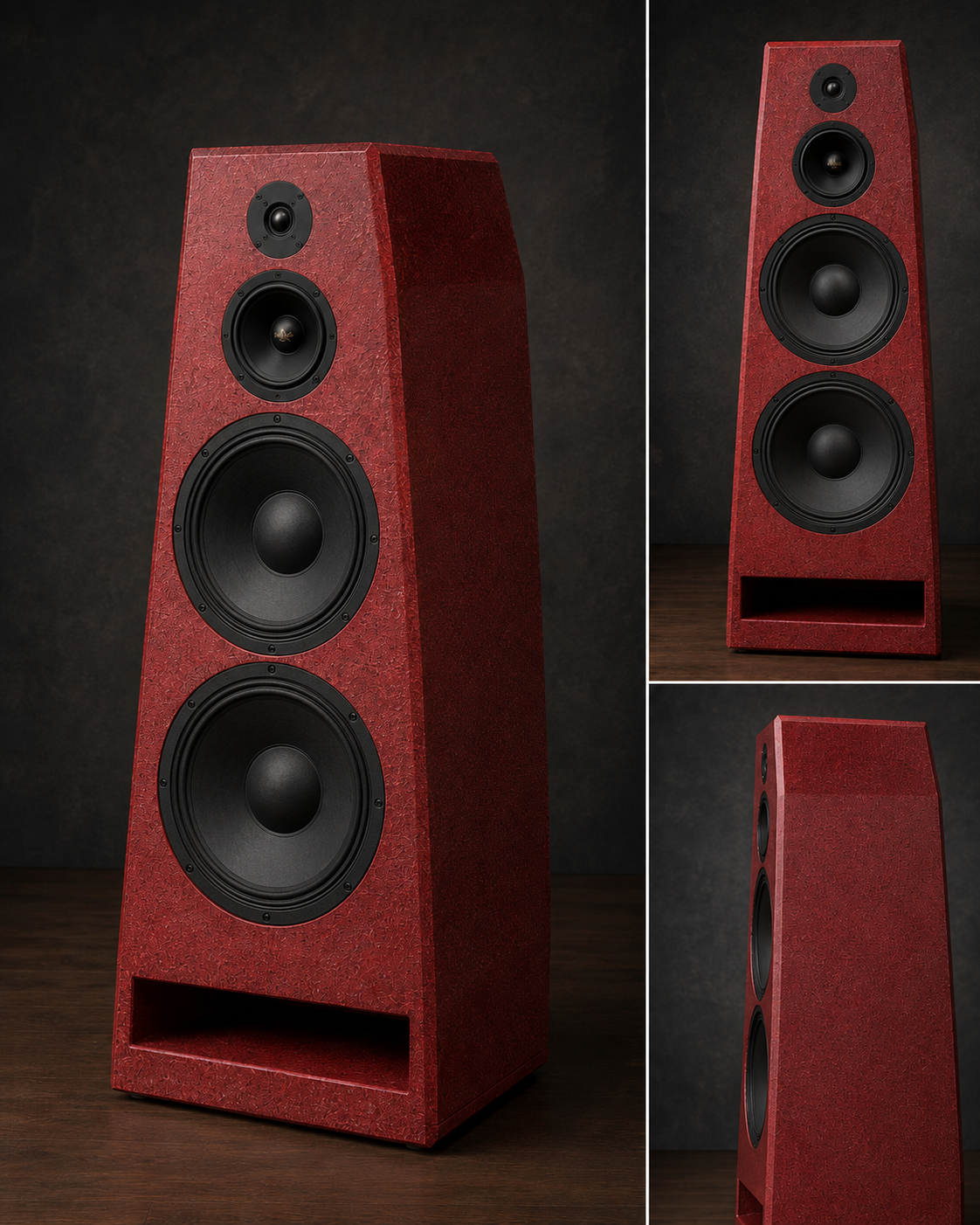
KSF Reference Ultra
Large-format active reference monitor currently under development. Full measurements, final specifications and build documentation will be published as the project progresses.
- Architecture3-way active
- Low frequency2 × 15"
- DSPExternal crossover / processing
- StatusDevelopment
Independent engineering.
KSF Audio was founded by an engineer, producer and lifelong builder who refused to accept that the most inspiring studio systems had to remain in the past.
The Reference Ultra was developed independently—from cabinet modelling and component research to system integration, amplification and final voicing.
Not as a tribute to nostalgia.
As proof that the ideas behind the great studio monitors can still be pushed forward.